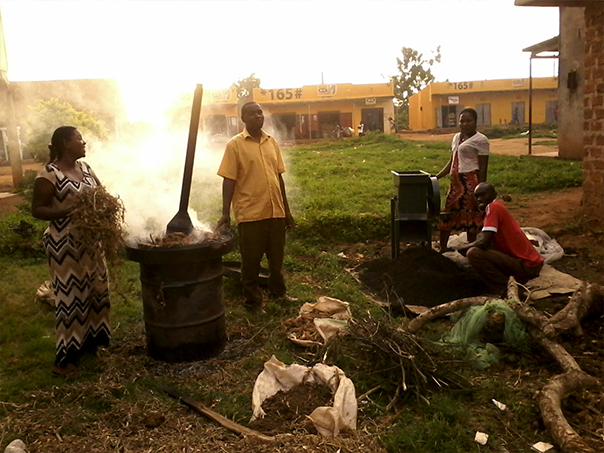
Community Sensitization
Communities working with ReRANare typically sensitized to the principles and practical benefits of conservation and regenerative farming, with an emphasis on transitioning from conventional methods to approaches that improve soil health, boost food security, and support cooperative economic resilience. First, local farmer groups are engaged through awareness raising sessions, which explain how practices like crop rotation, agroforestry, and organic soil amendments can restore land fertility, increase yields, and reduce inputs over time.
At the national level, ReRAN organizes trainings of trainers (TOTs) that introduce regenerative agriculture methods to groups, churches, CBOs, government agencies, and enterprise groups. These TOTs prepare local leaders to cascade training to community members through demonstration gardens, hands on planting activities, and structured peer learning forums. Messaging is sharpened to local agro-ecological realities, and implementers are supported to adapt the curriculum to their specific contexts.
At a broader scale, RERAN extends sensitization to the global church and international community, aiming to position regenerative agriculture as a scalable solution to hunger and environmental degradation. These sensitization efforts stress how implementing demonstration farms and replicable training models can lead to community owned economic development, stronger cooperatives, and formal relationships with off takers and processors, anchored through Memoranda of Understanding (MOUs).
Across all levels, ReRAN combines interactive workshops, demonstration plots, and partnership with local organizations to ensure continuity and scale. Key messages revolve around sustainable food production, soil health, resource conservation, and cooperative organization—delivered in local languages and embedded in community values. The approach ensures that the sensitization isn’t a one-time event but a multi-stage, locally owned transformation journey toward improved livelihoods and ecological stewardship